
Tracking Progress
Throughout the planning process, RVAgreen 2050 stakeholders were asked how progress could be tracked and reported towards achieving the goals of the Plan.
RVAgreen 2050 Implementation Tracker
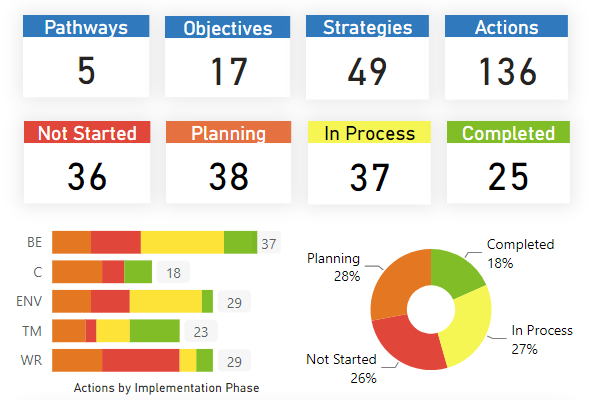 The Office in partnership with internal and external stakeholders, continues towork on the implementation of RVAgreen 2050. Everyday we are taking steps towards mitigating climate change for all Richmonders, with a focus on our frontline communities.
We’re building transparency tools like TRAC-E, our new RVAgreen 2050 implementation dashboard, which stands for Tracking Realtime Action on Climate Equity. TRAC-E (aka “Tracy”) makes it easy to see which sections of the Climate Equity Action plan have been implemented and which sections have yet to be completed.
Learn More About TRAC-E here.
Annual Reports
Each year the Office of Sustainability issues an annual report which documents yearly achievements of the office, progress on RVAgreen 2050 implementation, grants awarded, key projects, community engagement successes, and focus areas for the coming year.
|
|
| Read the FY24 Annual Report here. | Read the FY23 Annual Report here. |
Community Outcomes
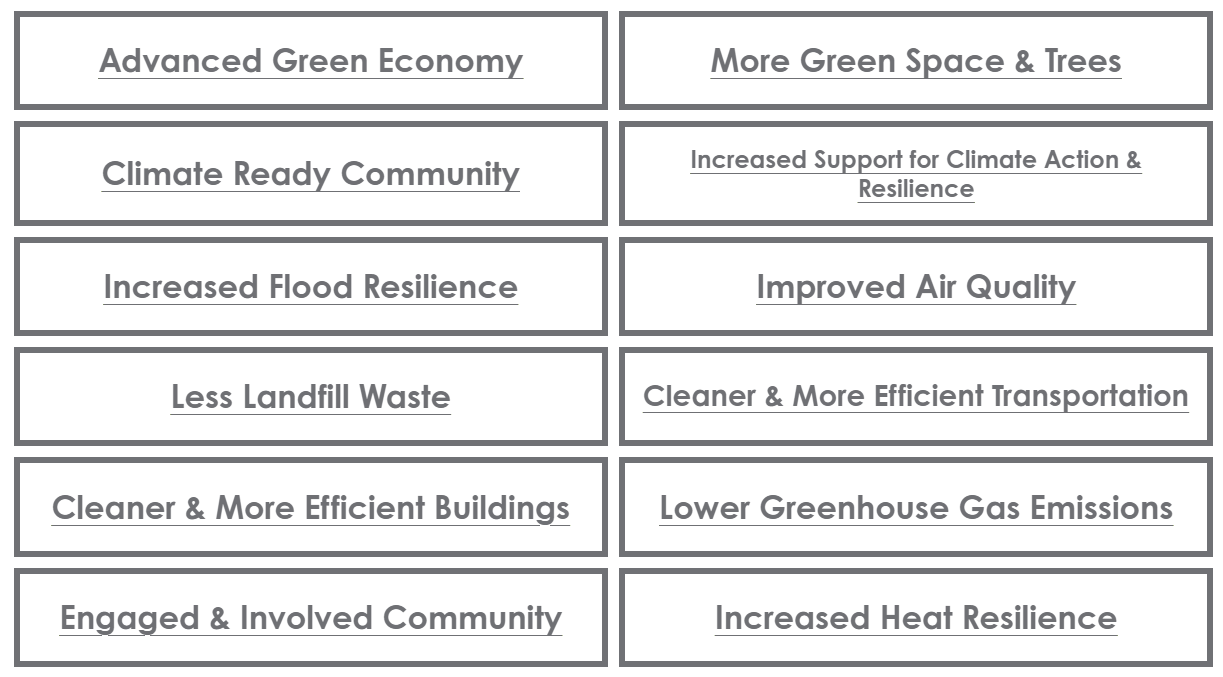 The Office of Sustainability, with input from the Working Groups, identified a set of 12 Outcomes measured by 24 Indicators to help measure progress towards the overarching goals of the 2030 Action Plan. For each Outcome, there are two indicators: one that is more “traditional” and one that is specifically geared towards ensuring equitable progress toward the Outcome.
In developing the Indicators, the Office considered what would be measurable with currently available data (or data we could eventually obtain), what would be meaningful to the community, and what would help ensure equitable progress toward the Outcomes.
Explore Outcomes and Indicators Here.