

City News
Sustainability
The Blue Flame is Green
TUESDAY, JANUARY 29, 2013
Natural gas is less expensive and “greener” energy source because less is lost during the delivery process. An energy source such as electricity may have higher efficiency ratings in your home, but you’re also paying for the energy lost getting it to you.
Electricity forecasters say the demand for power will increase by 18 percent over the next decade, but the sources of electricity will grow only by 8.5 percent. Nearly 50 percent of all electricity generated in North America comes from coal burning plants. As a result, increased electric demand will increase carbon emissions.
Weather disasters such as hurricanes, tornadoes and construction delays could leave you without power at times, so switching to gas appliances and heat could become a real security blanket in the near future. And you can help reduce carbon dioxide emissions in the atmosphere!
As for water heaters, tankless natural gas hot water heaters are the latest trend. They take up less space in your home than a water storage tank and provide an endless supply of hot water, at the same time saving energy.
Storage tank-type water heaters raise and maintain the water temperature to the tank’s setting. Even if no hot water is used, the heater continues to operate to maintain the temperature. You’re heating and reheating the same water, even when you’re sleeping or away from home. Just keeping the water you’re not using hot could account for as much as 20 percent of your annual water heating costs!
Tankless water heaters heat water only as it is used. The compact design of the tankless water heater permits installation virtually anywhere in your home, indoors or outdoors.
Going tankless is also going green. They’re less likely to end up in the landfill because the lifespan of a tankless unit is 2-3 times longer than the average tank water heater with its lifespan of 8-10 years.
Business Unit
Virginia No. 1 for Green Building
FRIDAY, JANUARY 25, 2013
Virginia Business reports that the U.S. Green Building Council based in Washington has listed the Commonwealth of Virginia as the No. 1 state for new eco-friendly buildings in 2012. Virginia had 170 projects encompassing 29.7 million square feet, certified as meeting Leadership in Energy and Environmental Design (LEED) standards.
The U.S. Green Building Council measures 3.71 feet of certified space per capita in its rankings.
One of the significant projects was the Cooper Vineyards in Louisa, the first winery on the East Coast to achieve LEED platinum certification. Richmond's green building efforts include the LEED silver certified Fire Station 17 on Semmes Avenue and the new elementary schools, Oak Grove-Bellemeade and Broad Rock.
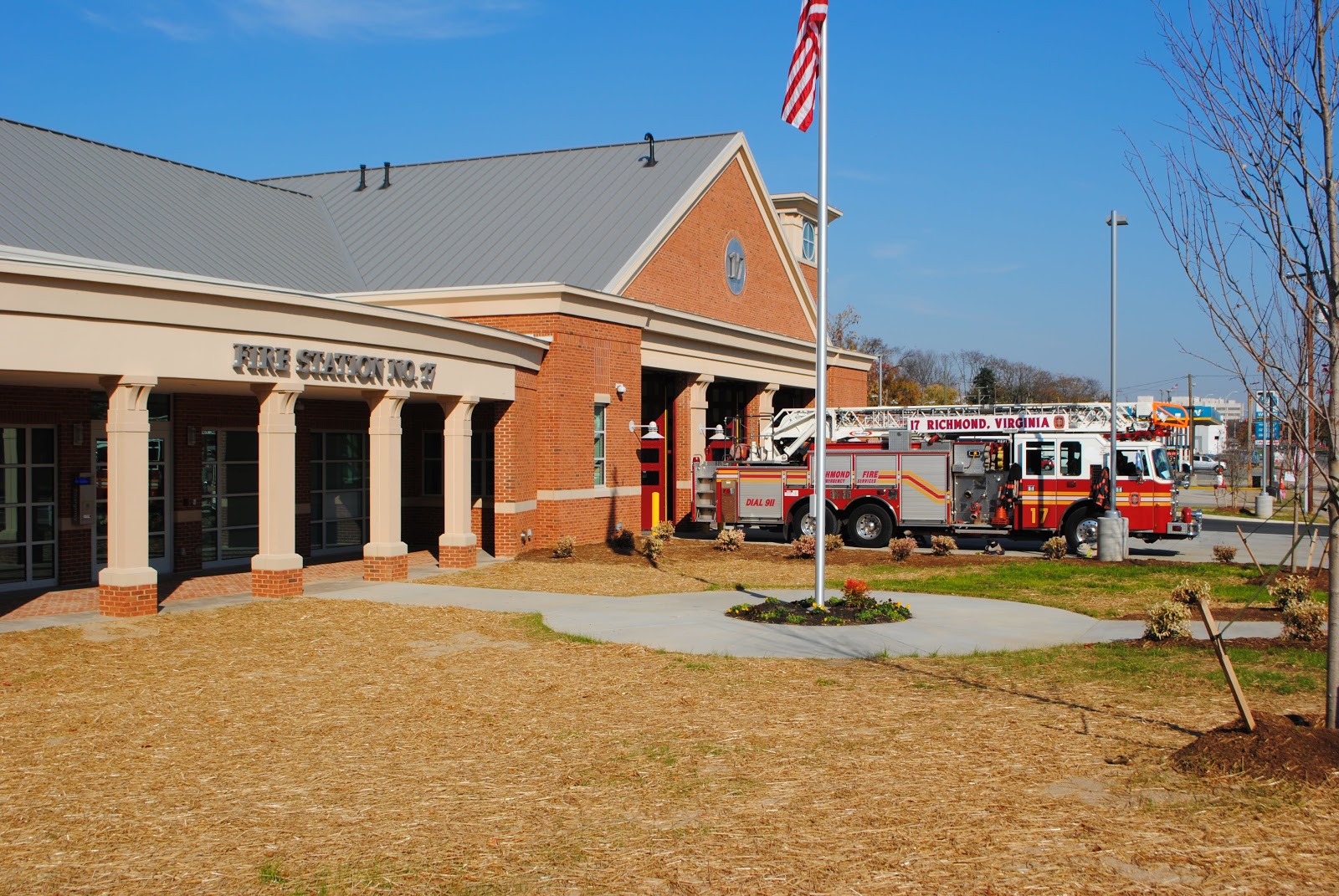 |
| Fire Station 17 |
Business Unit
Green Government Challenge
TUESDAY, DECEMBER 11, 2012
 |
| Photo provided by Steven R. Skinner APR |
The Virginia Municipal League’s Green Government Challenge is a friendly competition designed to encourage implementation of environmental policies and practical actions to reduce carbon emissions generated by local government and the community.
The challenge has 11 categories and 30 action items. Earning between 100-124 points out of a possible 200 earns certification as a Green Government. Scores of 125 points or higher earn silver, gold and platinum levels of certification. This year’s competition ended Sept. 10.
The city of Richmond first participated and became certified in 2009, won the silver in 2010, and the gold in 2011. This year, the city has been certified platinum. Joe Lerch (left), director of Environmental Policy for the Virginia Municipal League, presented the certification to Council President Kathy Graziano and Mayor Dwight C. Jones at the Dec. 10 City Council meeting.
Business Unit
Approvals for Solar and Vegetative Roofs Streamlined
MONDAY, DECEMBER 3, 2012
Richmond City Council approved an ordinance that streamlines the permit review process for solar and vegetative roofs at its Nov. 26 meeting. The paper was co-sponsored by Mayor Dwight C. Jones and Councilmen Chris Hilbert and Charles Samuels.
The purpose of the ordinance is to encourage the use of green roofs by processing building permit applications within 10 business days and associated plumbing, electrical and mechanical permit applications within five business days.
The ordinance is 2012-201-199.
Solar and vegetative roofs result in less electricity used in the building. Vegetative roofs absorb rainfall and decrease the amount of run-off from the building, which supports stormwater management efforts.
Business Unit
Join Richmond Tree Stewards
FRIDAY, NOVEMBER 30, 2012
The Richmond Tree Steward organization educates and trains people who wish to volunteer to work with the city's trees.
During 2012, the Richmond Tree Stewards accomplished:
- Completion of a tree inventory for Battery Park and presentation of the information to the Friends of Battery Park for future planning.
- Stop sign pruning in the Fan District, ensuring each stop sign was visible to drivers.
- Watering approximately 200 newly planted trees in Byrd Park, Forest Hill Park, and Gillies Creek Park from May through September. Each tree was watered every two weeks unless there was at least an inch of rain during the previous week. Watering young trees is critical to their survival and good health.
- Developmental pruning of young street trees. This pruning technique is necessary in order for some urban trees to develop a stronger and safer branching structure.
- A planting project in Chimborozo Park that put approximately 200 trees in the ground. This project was lead by two tree stewards, supported by the Alliance for the Chesapeake Bay. It was accomplished with the assistance of other volunteer groups.
- As of mid-October 2012, approximately 2,250 volunteer hours have been recorded for the year.
To join this growing organization, register for classes.
Business Unit
Or search using "Type it, find it" above
Pinned
Most Recent
Or search using "Type it, find it" above