
City News
Sustainability
RVAgreener Highlight: Wyatt
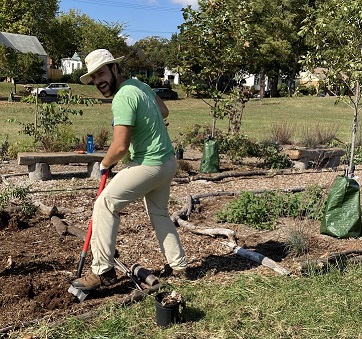 Meet RVAgreener Wyatt! He lives on the border of the Museum and Fan Districts in Richmond and is the sustainability projects and program coordinator for the VCU Office of Sustainability. He loves helping the local community and connecting students with helpful organizations. His favorite activity in Richmond is taking long walks in the James River Park System.
With VCU, Wyatt has planted and continues to take care of trees in two separate sites. He organizes the work for volunteers and creates the annual greenhouse gas emissions report. Lastly, he assists in developing the VCU sustainability strategy.
Wyatt is excited about RVAgreen 2050 and the collective action coming out of this work with the City of Richmond. Over the last few years, Wyatt has noticed a significant interest from community members about climate change. There is still work to be done and he is committed to doing it!
Author: Brian Park, University of Richmond Bonner Scholar
Business Unit
RVAgreener Highlight: Jason
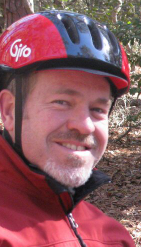 Meet RVAgreener Jason! He moved to Richmond 15 years ago and currently resides in the Bellevue area of Northside. Jason’s favorite parts of the city are hard to narrow down since they include all of the James River Park System, Carytown, and any place with solid walking and biking infrastructure. Jason teaches cultural anthropology at University of Mary Washington. One of the reasons he’s so focused on transportation is because of its impact on air quality - both air pollution and disease (such as issues with microscopic particles that come from car tires, which are then in the air we breathe).
As you have probably guessed, Jason considers himself a regular cyclist, enjoying the opportunities to get on his bike and venture through the city or even to go shopping. As if the rocky infrastructure was not challenging enough, Jason has shared that the warmer days also make this desired activity more challenging to experience. Nevertheless, this doesn't hinder his excitement for all of the electric bike structures he has seen popping up across the city and hopes that many more people will consider biking more regularly.
Jason has observed the increase in population and development in Richmond - along with more bike lanes - and believes this is positive but emphasizes we need to consider the way people are choosing to travel around the city: are they driving more or less? We also need to consider how climate change is impacting the ability and willingness to be outside and use transportation like bikes. For example, someone may choose to or have to drive because it’s too hot or too stormy to use other options.
Jason suggest looking at examples from many northern European cities that have made it really safe to get around without cars and “cater less to cars,” like Copenhagen. It’s not clear yet whether these efforts can be easily replicated in Richmond, but Jason reminds us that these places weren’t always so focused on people and safety.
Jason is part of the RVAgreen 2050 Transportation Working Group and got involved because it is an extension of other work he has done, like serving on the similar working group for the Richmond 300 Master Plan process. When he and his family moved to Richmond, they started biking more to help make it more appealing to people and he has made good connections with neighbors in this field. He would have liked for the RVAgreen 2050 working group meeting sessions to be in person to really embrace the energy of the participants. The conversations are challenging and deeply immersed in equity, which has been unprecedented in the prior engagements he has been in involved in.
Links:
Richmond officials considering free memberships for RRHA residents as part of bike-share expansion
Author: JaVonne Bowles, RVAgreen 2050 Racial Equity & Environmental Justice Roundtable and Working Group member
Photo: Bikeable Richmond
Business Unit
RVAgreener Highlight: Parker
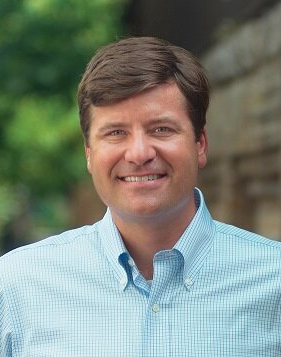
Meet RVAgreener Parker! A Richmond neighbor for over 15 years, Parker moved here from Virginia Beach. Parker served on City Council for seven years and carried the nickname “Lorax” as he “spoke for the trees.” Now, he works as the Executive Director of Capital Region Land Conservancy (CRLC). Read more about CRLC’s work in the organization highlight below.
On a regular day, you can find Parker reaching out to employees and making job assignments. He also calls donors and communicates with board members on important decisions. He talks with attorneys about land trust-related matters. Parker also takes time out of his day to answer general inquiries from the public. Overall, Parker helps CRLC do environmental due diligence.
CRLC is Richmond’s only land trust. They find land that needs to be protected and create more public green spaces. They support urban agriculture as well, with agriculture being the largest industry in Virginia. Virginia’s economy requires land and CRLC helps maintain the land.
Parker’s work is more important than ever as environmental changes sweep the nation. He is motivated by the passion of the younger generations to improve the state of the Earth and create a sustainable future. That is why he is so excited about RVAgreen 2050 because it will help the Richmond community achieve a sustainable future.
Author: Brian Park, University of Richmond Bonner Scholar
A Parks Partnership with Capital Region Land Conservancy
Parks help us stay cool in the summer and stay healthy by giving us opportunities to exercise and connect with nature. But not all Richmonders have access to these benefits. How do we make sure all Richmonders can access a park or greenspace within a 5-minute walk, bike, or bus ride? The Capital Region Land Conservancy is helping to make that vision a reality one park at a time.
If you have ever seen the RVAgreen 2050 Climate Equity Index, you know access to green space depends on the neighborhood you live in and how much money has historically been invested in your community. Low income, Black, and Latino neighborhoods in Richmond are hotter, have fewer parks and trees, and have less access to transportation. RVAgreen 2050 is identifying where these neighborhoods are, connecting with those communities, listening to their needs, and identifying priorities for the city’s first climate action and resilience plan. The City of Richmond does not always have the resources to buy land and build new parks—and that is where a local land trust like the Capital Region Land Conservancy comes in!

Capital Region Land Conservancy (CRLC) is a long name that means protecting the land, waters, and forests that you love in the Richmond region. You may know CRLC for writing the conservation easement that protects the James River Park System or from buying riverfront property on Dock Street recently to protect the view from Libby Hill and open new space along the river to the public. Capital Region Land Conservancy works by using government grants and individual donations to buy land where it is needed most to protect ecosystems, natural resources like water, historic resources like battlefields, and provide benefits to the community as parks. CRLC then turns over that land to the City of Richmond Parks Department, National Park Service, or another government entity with a contract saying the government will turn the land into a park and care for the land forever.
CRLC wants their work to be equitable and impactful to the community and better suit the community’s needs in Richmond. That’s why CRLC is working with the city to build new parks in Southside Richmond, like their new project on Warwick Road. CRLC recently received a donation of 13 wooded acres of land on Warwick Road which they hope will become a city-owned public park after a thorough community engagement process. This new park will connect the Deerbourne and Walmsley neighborhoods, where 51% of households are below the poverty line, and provide a space for students at Thomas C. Boushall Middle School to learn about watersheds and the environment!
As we continue building partnerships between the City of Richmond, communities on the frontlines of climate change, and non-profit organizations to create new green spaces in Richmond, CRLC will continue to improve how they make the community’s vision a reality.
So, does your neighborhood need a new park? To learn more check out the RVAgreen 2050 Climate Equity Index or connect with the Capital Region Land Conservancy, by emailing Peter Braun at peter@capitalregionland.org or visit their website.
Facebook: Capital Region Land Conservancy
Twitter: @CapRegionLand
Instagram: @capitalregionlandconservancy
Author: JaVonne Bowles, RVAgreen 2050 Racial Equity & Environmental Justice Roundtable and Working Group member
Business Unit
RVAgreener Highlight: Shannon
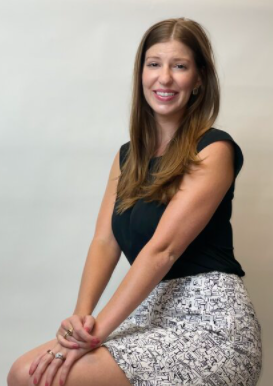 Meet RVAgreener Shannon! In her own words:
I moved to Richmond in 2018 after graduating from James Madison University, and immediately fell in love with this river city. I live in Church Hill with my husband and our dog. One of my favorite parts about the neighborhood is its thriving urban ecosystem. Once I witnessed a bald eagle and hawk fight over a fish just above the spire of St. Patrick’s Catholic Church on 25th and Broad. Every summer, migrating monarch butterflies visit the milkweed planted in my community garden plot. But while there are still natural wonders to cherish, summers in Richmond are already hotter and wetter than is sustainable. This year for example, several seemingly healthy oak trees fell across Church Hill after days of excess rain. Waterlogged roots destroyed concrete sidewalks and toppled onto homes. Fortunately no one was harmed, but it easily could have been a lethal event.
As someone who struggles with climate anxiety, especially as it pertains to the future of Richmond’s residents, I decided to get involved with the city’s Office of Sustainability when I saw a yard sign for RVAgreen 2050. RVAgreen 2050 is the city’s equity-centered climate action and resilience blueprint. This summer I volunteered my skills to develop a concept for the city’s first ever climate-themed youth engagement program. JaVonne Bowles and I created a program - in partnership with community organizations, nonprofits and businesses - to enrich the lives of 8-10 students from Richmond’s historically underrepresented districts. Over the course of our work I observed that Richmonders are informed, collaborative, and resilient. I am proud to be a part of this community of people who do the most radical thing we can do in this fiery age, and that is to believe in a harmonious, green future.
Follow Shannon on social media at @mrslilburn
Business Unit
RVAgreener Highlight: Jeremy
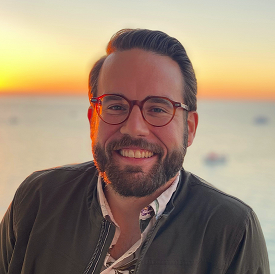 Meet RVAgreener Jeremy - or as you may be know him, Dr. Hoffman from the Science Museum of Virginia - the gentleman that made us more aware of the urban heat island effect and its impacts to our beloved city.
Jeremy has lived in Scott's Addition for the past five years and has made quite a splash in Richmond. His love for the public green spaces, trail systems, and the way the city "hugs a historic river" was all a part of his decision in making Richmond his new home.
His time at the Science Museum has primarily focused on partnering with local organizations that are committed to addressing disparities throughout the city, including air quality, heat, and carbon emissions. Jeremy has noticed a common trend when asking neighbors how they would like to become more climate-resilient:
"There is almost a unified vision among neighbors to have safe, beautiful, and connected neighborhoods, and this is climate justice. This can be our experience. Yet, there is a hyper-focus on vehicles here in Richmond, when places around the world have realized that bike and pedestrian infrastructure and safety are priorities. People want walkable neighborhoods that have quality homes."
While Richmond can surely tout the Pulse rapid transit line and the Capital Trail, Jeremy acknowledges that transportation is a significant source of our greenhouse gas emissions, so we must extend and expand these amenities to all parts of the city.
In addition to putting Richmond on the map for urban heat island and air quality studies, Jeremy and the Science Museum have also supported the Office of Sustainability by helping develop to the RVAgreen 2050 climate vulnerability and risk assessment and serving on the Environment Working Group. Jeremy shares that one thing he enjoys most about this collaborative is the mutual learning and sharing that takes place, which he also experiences in the courses he teaches as an affiliate faculty at VCU.
Links:
Science Museum of Virginia - RVAir
Author: JaVonne Bowles, Office of Sustainability Equity Fellow and RVAgreen 2050 Roundtable Member
Business Unit
Or search using "Type it, find it" above
Pinned
Most Recent
Or search using "Type it, find it" above